
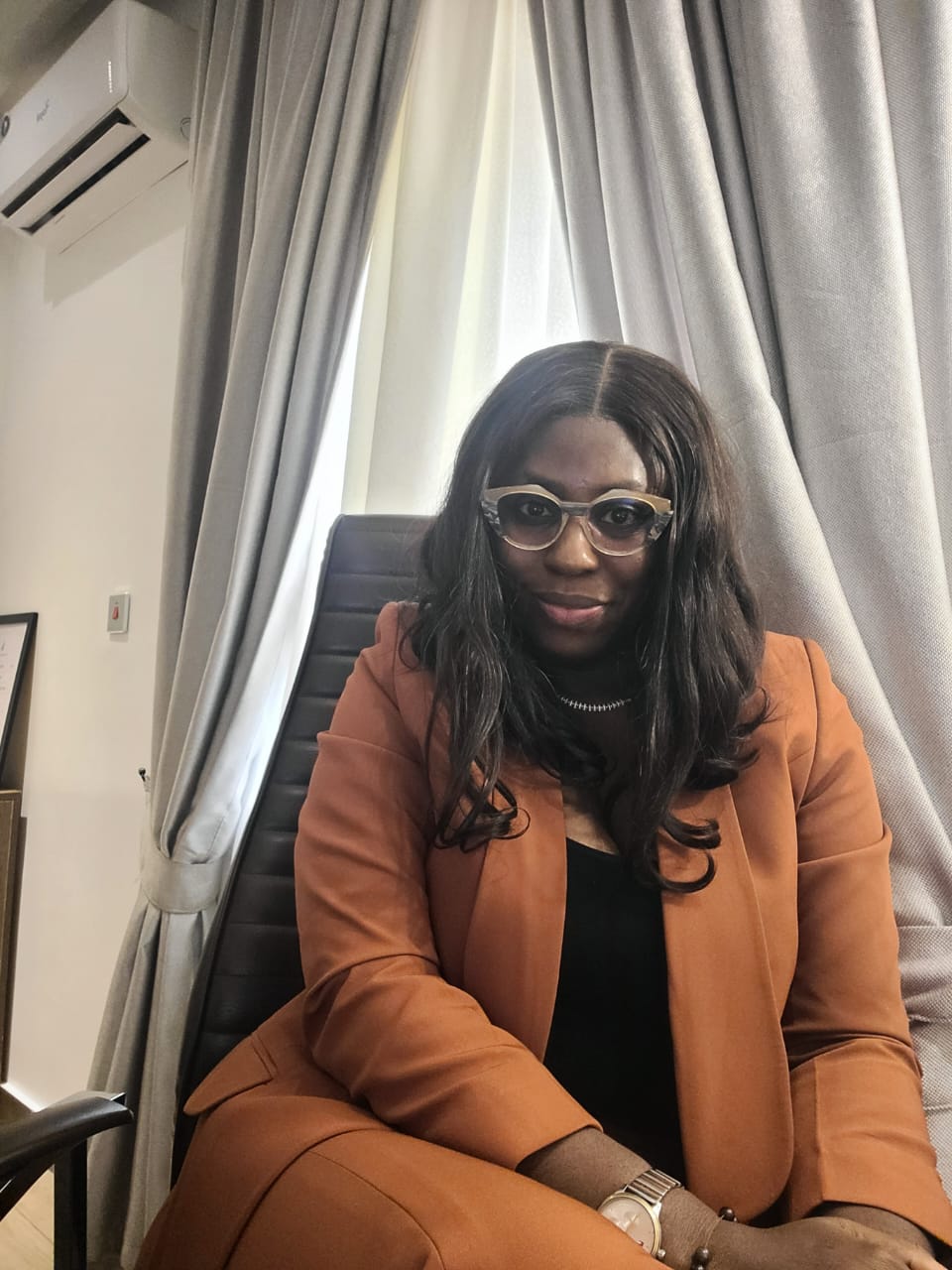
Dr. Vivian Dimgba Advocates For Robust Conversation About Women Participation In Politics, Challenges Women To Be Natural Allies On The Bill
We Need to Start Having honest coonversations about Women’s political participation:
Women in Nigeria constitute nearly half the population , about 50%, yet occupy less than 5% of elective positions nationally. At the state level, the picture is even more troubling because some states do not have female legislators at all.
These numbers are not just statistics. They are evidence of a structural failure in our democratic system.
But if we are going to hold honest conversations about women political participation, then we must acknowledge how we have unwittingly sabotaged ourselves with our own internal dynamics…
As someone actively involved in the advocacy around the Reserved Seats Bill, I have been observing the trajectory of the conversations around this bill with dismay .
What should be a moment of collective mobilization for women is, in many cases, has turned into something else entirely. Instead of building a united front, we are “factionlized” with no clear strategy. All I see is individual positioning and competing personal agendas.
To be honest, much of it feels performative with no clarity on the end goal. I do not see enough authenticity or solidarity across the women groups. And I certainly do not see enough honest reflection about what this moment truly demands of us.
If our goal is truly to expand women’s political participation in Nigeria, then the work can not remain confined to elite rooms in Abuja.
Elitist politics is a self- serving politics.
The real work should be happening in our communities or clusters; markets, town halls, churches, universities, professional associations, and grassroots networks, eplaining to women what the Reserved Seats Bill actually means.
How many women across Nigeria truly understand what this bill is about?
How many grassroots women know how it could reshape political representation?
Yet many of us remain concentrated in the capital, circulating the same conversations among ourselves, while the broader movement that should be driving this effort remains largely absent.
But there is another uncomfortable truth that we must confront if we are serious about this conversation; When I ran for election in 2023, most of the resistance I faced did not come from men. It came from women. In fact, I received more support from men than I could have imagined. Many of them encouraged me and believed that a woman could legitimately occupy that political space.
But some of the most determined efforts to undermine my candidacy came from women who should have been natural allies. Shocked? Sadly true.
At the time, the chairman of my ward was a woman. Yet she did everything within her power to undermine and spent the better part of her time pandering to who she conceived was the highest bidder for the position.
That experience forced me to confront a difficult question, one that many of us avoid asking: Is the problem of women’s political participation purely about patriarchy?
Or are women, sometimes unintentionally, also enabling the very structures that exclude them by their actions?
This is not an easy question. But it is a necessary one. Because until we can answer it honestly, we cannot move forward.
Too often, the conversation stops at naming patriarchy, misogyny, and gatekeeping. And while those forces absolutely shape political access, they do not tell the full story. We must also interrogate our internal dynamics.
In many political spaces, women operate within a system built on scarcity. There are very few seats, opportunities, and little institutional support. In such an environment, another woman can easily be seen not as a partner in progress but as a competitor for a limited space.
This scarcity mindset has done enormous damage to the women’s political movement.
Instead of building pipelines, we build walls. Instead of mentoring or succession planning, we compete and guard territory against another woman.
If we examine the history of women who have held elective or appointive positions, another question becomes unavoidable:
How many women have they mentored?
How many have deliberately prepared other women to succeed them?
Men in politics understand the importance of succession. They build networks, nurture protégés, and strategically position the next person who will carry their influence forward.
But women have not consistently built those same systems of continuity.
We must also acknowledge the widening divide between younger women entering politics and older women who have already navigated the system. Instead of mentorship and collaboration, we too often see mistrust, tension, and generational friction.
The result is a movement weakened by internal bickering and discord, with everyone trying to outdo the other, instead of collaborating to drive systematic lasting change.
Under these conditions, it becomes difficult to build the kind of organized, disciplined coalition that real structural reform requires.
This is why political literacy matters.
It is not enough to shout “patriarchy” or name “misogyny” or accuse the system of gatekeeping.
The deeper question is this:
What are we doing in our own spaces to support the next political woman?
How many women are intentionally opening doors for others?
How many are actively building structures that ensure that when one woman leaves office, another capable woman is ready to step forward? Until we begin to answer these questions honestly, the conversation around women’s political participation will remain incomplete.
Personally, I remain cautious about the prospects of the Reserved Seats Bill. I would be pleasantly surprised if it passes in the current environment. Not because the bill lacks merit , but because legislative reform succeeds when it is backed by a united, organized, and politically conscious constituency.
If we do not define the rules of engagement, build real solidarity, and expand political literacy among women across the country, we risk spending enormous energy without achieving meaningful change.
This moment requires more than visibility.
It requires authentic solidarity, strategic thinking, and a genuine commitment to building a sustainable pipeline of women who will not only enter politics but transform it.
The question is no longer simply whether women should participate in politics.
The real question is:
Are we ready to build the kind of political culture that will allow women to succeed each other, support each other, and truly reshape power?
The ball is in our courts.
We “sink or swim”
Our choice.
Dr.Vivian Dimgba
Imo State Delegate Committee Chair
Reserved Seats For Women’s Bill

4th Estate Reporters
ABOUT THE PUBLISHER
Njoku Macdonald Obinna is a distinguished media consultant, public relations expert, and publisher of 4th Estate Reporters. With an impressive career spanning over 2 decades in the media and communications industry, he has built a solid reputation for excellence, strategic insight, and impactful storytelling.
Macdonald had served as a Correspondent with Ben TV London in Port Harcourt , and had also featured very prominently in national newspapers before establishing his media outfit.
He is the South East and South - South Business Operations Manager of Excel International Media group, and had attended a couple of international conferences outside Nigeria.
As an award- winning media personality, Macdonald has used his wealth of experience in communications strategy and public engagements to promote African culture and festivities, sports development, political leadership, and traditional institutions.
He has executed social documentaries and corporate profiling of both companies and individuals, leveraging media and public relations to enhance organizations profile and activities.
Discover more from 4th Estate Reporters
Subscribe to get the latest posts sent to your email.
About author
You might also like
PFIPC Scandal: Deputy Speaker Benjamin Kalu Reveals How Alleged Fake Presidency Letter Led to Meeting with Suspected Impostor
PFIPC Scandal: Deputy Speaker Benjamin Kalu Reveals How Alleged Fake Presidency Letter Led to Meeting with Suspected Impostor Njoku Macdonald Obinna Fresh revelations have emerged in the unfolding controversy surrounding
Nigeria Media Expert Visits Executive Secretary of the National Assembly Library Trust Fund, Nwawuba, Commended for his contribution to the media industry and journalism practice
NIGERIA MEDIA EXPERT VISITS EXECUTIVE SECRETARY OF THE NATIONAL ASSEMBLY LIBRARY TRUST FUND, NWAWUBA, COMMENDED FOR HIS CONTRIBUTIONS TO THE MEDIA INDUSTRY AND JOURNALISM PRACTICE Njoku Macdonald Obinna Federal Capital

AFIAOLU NNEWI 2026: EBUKA ONUNKWO REVEALS NNEWI TIES, POLITICAL JOURNEY
AFIAOLU NNEWI 2026: EBUKA ONUNKWO REVEALS NNEWI TIES, POLITICAL JOURNEY At the 2026 edition of Afiaolu Nnewi, held on Tuesday, August 25, leading Anambra South senatorial contender, Chief Ebuka
0 Comments
No Comments Yet!
You can be first to comment this post!